

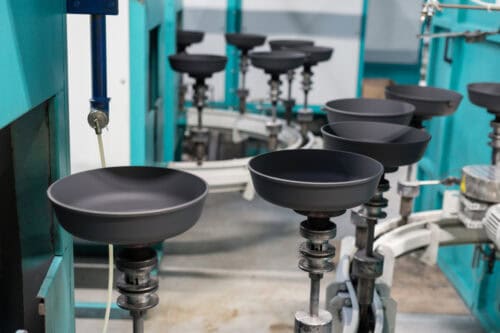
Standard coatings are insufficient for industrial components exposed to harsh temperatures, corrosive chemicals, or high-friction requirements. For engineers and manufacturers who require exceptional performance in the most demanding conditions, xylan fluoropolymer coatings have emerged as the preferred option. This thorough guide examines the qualities that set Xylan coatings apart, their uses in various industries, and how to choose the best formulation for your particular requirements.
What Are Xylan Fluoropolymer Coatings?
Whitford Corporation created the Xylan family of high-performance fluoropolymer-based coatings. These coatings create coating systems with outstanding properties by combining fluoropolymer resins, usually PTFE (polytetrafluoroethylene) or FEP (fluorinated ethylene propylene), with carefully chosen additives and binders.
In contrast to simple fluoropolymer coatings, Xylan formulations include extra ingredients that improve performance, durability, and adhesion. As a result, the coating system offers low friction coefficients, chemical inertness, superior release properties, and extreme temperature resistance that are unmatched by conventional industrial coatings.
There are several formulations in the Xylan product line, each designed to meet particular performance standards. These coatings, which range from dry film lubricants to corrosion-resistant barriers, are essential to the food processing, automotive, chemical, aerospace, and many other industries.
Key Properties and Benefits of Xylan Coatings
Exceptional Non-Stick and Release Properties
The exceptional non-stick surface of Xylan coatings is one of their most valued features. Because of the incredibly low surface energy produced by the fluoropolymer base, items that range from hostile chemicals to sticky meals cannot adhere. Because of this characteristic, Xylan coatings are extremely useful in situations where clean release is essential, such as in pharmaceutical manufacturing and food processing equipment.
Xylan-coated materials prevent the buildup of substances that would typically stick to metal surfaces. Important advantages include:
- Time and effort savings with simpler cleaning procedures
- Reduced downtime for cleaning and maintenance of equipment
- Increased product quality as a result of reliable release performance
- Eliminating sticking issues that delay production lines resulted in a dramatic increase in productivity
- Avoiding the accumulation of materials that could contaminate later manufacturing runs
Outstanding Low Friction Performance
Depending on the formulation, xylan coatings can have coefficients of friction as low as 0.02 to 0.10. This extremely low friction prolongs component life, lowers energy consumption, and lessens wear on moving parts. Even in situations when traditional lubricants would malfunction, Xylan’s lubricating qualities continue to work well over a broad temperature range.
Xylan offers reliable friction properties for slides, fasteners, bearings, and other mechanical parts, enhancing assembly procedures and operating dependability. Problems associated with wet lubricants, such as contamination, migration, and the attraction of dirt or debris, can be avoided with dry lubrication. Xylan’s dry film lubrication makes it an ideal choice for nonstick coatings for assembly assist tooling, reducing friction during installation and preventing damage to threaded fasteners.
Superior Temperature Resistance
The temperature tolerance in different Xylan formulations ranges from -400°F to over 550°F (-240°C to 288°C). Coated components can operate reliably in extremely hot or cold temperatures thanks to their exceptional thermal resilience. Despite these temperature fluctuations, the coatings do not degrade, oxidize, or become brittle, maintaining their protective qualities.
Xylan’s thermal stability is advantageous for high-temperature applications in chemical processing equipment, industrial ovens, automotive exhaust systems, and aerospace components. Cryogenic applications also benefit from the coating’s ability to function at exceptionally low temperatures.
Excellent Chemical Resistance
Xylan coatings have exceptional resistance to acids, bases, solvents, and other harsh chemicals due to the chemical inertness of fluoropolymers. Long-term exposure to corrosive substances that would quickly erode exposed metal surfaces can be tolerated by coated components.
In industrial manufacturing facilities, offshore oil and gas operations, and chemical processing plants, this chemical resistance safeguards priceless equipment. By forming a barrier between reactive chemicals and substrate materials, the coatings stop corrosion and increase the lifespan of equipment.
Enhanced Wear and Abrasion Resistance
Xylan formulations include hardening additives that greatly increase wear resistance, even though pure fluoropolymer coatings can be rather soft. These reinforced coatings retain their low friction and release characteristics even under abrasive conditions.
The protective barrier that Xylan offers is helpful for components that are exposed to sliding contact, impact, or abrasive particles. The coatings are appropriate for demanding industrial applications because they are more resistant to erosion, gouging, and scratches than conventional fluoropolymer coatings.
Common Xylan Formulations and Their Applications
Xylan 1000 Series
General-purpose fluoropolymer coatings that can be used in a variety of applications are shown with the 1000 series. These formulations have strong resistance to corrosion, low friction, and excellent release. When moderate performance requirements are met, they perform well on metals like steel, aluminum, and others.
Fasteners, threaded parts, small mechanical components, and general industrial equipment are among the common uses. When the extreme performance of specialized formulations is not required, the 1000 series provides an affordable option.
Xylan 1010 and 1014
These formulations are especially well-liked for fastener applications and provide improved lubrication. Xylan 1010 is useful for crucial bolted assemblies in industrial, automotive, and aerospace equipment because it offers reliable torque-tension relationships. By lowering friction beneath bolt heads and between threads, the coating permits appropriate preload without galling or seizing.
Engineers have the option to optimize for particular assembly requirements or substrate materials thanks to Xylan 1014’s comparable advantages and marginally different performance characteristics.
Xylan 1052
This formulation performs exceptionally well in applications that call for exceptional chemical resistance along with superior release characteristics. Xylan 1052 is widely used in chemical processing, pharmaceutical manufacturing, and food processing equipment, where chemical inertness and non-stick performance are essential.
The coating offers the durability required for commercial and industrial food production environments while maintaining FDA compliance for food contact applications.
Xylan 1070
Xylan 1070 offers improved abrasion protection with low friction properties when maximum wear resistance is needed. Reinforcing additives are used in this formulation to produce a harder, more resilient surface that is appropriate for parts that experience high mechanical stress.
Pump parts, valve parts, mechanical seals, and other equipment where sliding wear would normally limit service life are examples of applications.
Xylan 1424
This high-performance formulation provides exceptional friction reduction along with corrosion protection. In corrosive situations where metal protection is crucial, such as offshore oil and gas applications and marine environments, Xylan 1424 performs remarkably well.
The coating offers the low-friction characteristics anticipated from fluoropolymer coatings along with a strong barrier against atmospheric corrosion, industrial chemicals, and saltwater.
Industries and Applications
Aerospace and Defense
Xylan coatings are essential to the functionality of defense equipment, missile systems, and aircraft parts. Materials used in the aerospace industry must be dependable in the face of extreme temperature fluctuations, resistant to corrosion from exposure to the environment, and able to reduce weight by reducing friction.
Xylan coatings are frequently found on hydraulic system parts, fasteners, actuators, and landing gear components. These coatings are crucial for aviation safety and dependability because of their resistance to jet fuel, hydraulic fluids, and extremely high temperatures.
Automotive Manufacturing
Many parts used in modern cars use Xylan coatings. The low friction and high temperature resistance are advantageous for engine parts, brake components, suspension fasteners, and exhaust system hardware.
The coatings lower warranty claims for corrosion or component failure while assisting manufacturers in meeting strict performance requirements. Consistent torque characteristics and thread corrosion prevention are advantageous for assembly operations.
Oil and Gas Industry
Some of the most extreme operating conditions are encountered by pipeline components, pumps, valves, and drilling equipment. Extreme pressures, hydrogen sulfide, exposure to saltwater, and corrosive drilling fluids are all prevented by xylan coatings.
In both onshore and offshore operations, the coatings increase equipment longevity, lower maintenance needs, and avert expensive failures. The low friction and temperature resistance are especially advantageous for downhole tools.
Food Processing and Packaging
Food manufacturing equipment has to withstand repeated cleanings with harsh sanitizers and adhere to stringent FDA regulations. Approved xylan coatings for food contact offer non-stick surfaces that keep things hygienic, make cleaning easier, and stop debris buildup.
Xylan coatings are frequently used in molds, packaging machinery, conveyors, and mixing equipment to increase productivity and product quality. The organic acids, fats, and cleaning agents used in food production are all resisted by the coatings.
Chemical Processing
Xylan’s chemical resistance is advantageous for chemical plant piping systems, reactor vessels, pumps, and valves. The coatings lessen contamination concerns while shielding costly equipment from corrosive process chemicals.
Materials that won’t react with the product or contaminate it are necessary for many chemical processes. An inert surface that preserves chemical purity and shields the underlying substrate is offered by fluoropolymer coatings.
General Manufacturing
Xylan coatings are used in countless manufacturing processes to address specific production issues. While mechanical assemblies benefit from reduced friction, molds and dies benefit from release properties. In a variety of industrial settings, corrosion protection prolongs the life of equipment. Because Xylan formulations are so versatile, engineers can find solutions for a wide range of manufacturing issues, including noise reduction, galling prevention, and sliding wear.
Application and Curing Process
To get the best results when applying Xylan coatings, certain steps have to be followed. Surface preparation is usually the first step in the process, and it has a significant impact on coating longevity and adhesion. To apply the coating, surfaces need to be dry, clean, and appropriately textured.
The surface profile required for mechanical bonding is produced by chemical etching or grit blasting. Before applying a coating, any contamination from oils, greases, or other materials must be totally eliminated. The state of the substrate has a direct impact on the coating’s adhesion and functionality.
Although some formulations work with dip or flow coating techniques, xylan coatings are usually applied by spray application. To achieve uniform coverage and the right film thickness, professional applicators use specialized equipment. Coatings between 0.5 and 1.5 mils thick are needed for the majority of applications, though exact specifications differ depending on the formulation and use.
Following application, industrial ovens are used to cure the coated components. Curing times and temperatures vary depending on the particular Xylan formulation, but they usually fall between 400°F and 750°F for 10 to 30 minutes. The final performance properties develop and the coating components become interconnected with this thermal cure.
Reliable quality and performance are provided by expert coating facilities like Sun Coating, we maintain exact control over application and curing parameters. Professional coating services are valuable for producing dependable results because they require the specific tools and knowledge needed for correct application.
Selecting the Right Xylan Formulation
A number of factors related to the needs of your specific application will impact your choice of Xylan coating. Think about these important selection criteria:
- Temperature Exposure: Formulations that are specifically rated for extreme temperatures are needed for applications involving extreme heat or cold; various products provide protection ranging from -400°F to over 550°F.
- Chemical Exposure: Although all Xylan coatings have good chemical resistance, some formulations offer better defense against particular solvents, acids, or bases that your components may come into contact with.
- Mechanical Requirements: Applications that need maximum abrasion resistance may select different formulations than those that prioritize low friction. Think about load-bearing requirements, wear resistance, and friction reduction.
- Substrate Material: For the best adhesion and performance, different metals may call for different primers or coating formulations. There are particular factors to take into account for steel, stainless steel, aluminum, and specialty alloys.
- Regulatory Compliance: Only approved formulations are available for applications involving food contact or aerospace. Finding appropriate coating systems is aided by knowledge of relevant regulations.
Navigating this selection criteria is made easier by working with knowledgeable coating specialists. With decades of experience applying cutting-edge coatings, Sun Coating is able to provide the knowledge required for correct application as well as suggest the best Xylan formulation for particular needs. Partnering with experts in Non-Stick Coating Services helps manufacturers choose the right Xylan formulation for their application, from chemical resistance to wear protection.
Comparing Xylan to Other Coating Options
Making informed choices is made simpler by knowing how Xylan coatings stack up against alternatives. The improved durability and adhesion of Xylan formulations are usually absent from standard PTFE coatings, despite the fact that they provide comparable non-stick and chemical resistance. Xylan systems’ proprietary additives improve bonding strength and wear resistance.
Although conventional zinc or cadmium plating prevents corrosion, it lacks Xylan’s low friction, temperature resistance, and release qualities. Fluoropolymer coatings frequently offer more complete solutions for applications needing multiple performance characteristics.
Molybdenum disulfide coatings offer superior lubrication, but they are limited by temperature and lack Xylan’s chemical resistance and non-stick qualities. Every coating technology has advantages for certain applications.
Although ceramic coatings are extremely hard and resistant to temperature, they usually have higher friction coefficients and lack the release qualities required for many applications. Which performance traits are most important will determine the decision.
When there are several performance requirements, xylan’s combination of qualities makes it useful. Its combination of low friction, chemical resistance, temperature stability, and non-stick properties is unmatched by many coating systems.
Maintenance and Longevity
When applied correctly, Xylan coatings offer years of dependable service with little upkeep. These dry film coatings protect and lubricate continuously without the need for extra treatment, in contrast to wet lubricants that require periodic reapplication.
Usually, just water and mild detergents are needed to clean coated surfaces. Cleaning is made easier by the non-stick qualities that stop process materials from sticking. Avoid using abrasive cleaners or harsh scrubbing to keep the coating from being mechanically damaged.
Application circumstances and the particular demands made on the coating determine service life. While parts exposed to extreme conditions or severe abrasion may need to be recoated after a few years of use, components in mild environments can keep their coating integrity for decades.
After adequate surface preparation, components can usually be recoated when coating wear does occur. Because of their renewability, Xylan-coated parts are more cost-effective than parts that need to be replaced when surface deterioration happens.
The Value of Xylan in Modern Surface Engineering
Advanced surface engineering solutions for demanding applications in a variety of industries are represented by xylan fluoropolymer coatings. Conventional coatings and surface treatments are challenged by their special combination of low friction, chemical resistance, temperature stability, and release properties.
Xylan coatings provide dependable performance in the most demanding settings for everything from offshore drilling instruments to automotive components, from food processing machinery to aerospace fasteners. Engineers can choose the best coating for a given set of needs thanks to the range of formulations available, whether those needs are lubricity, wear resistance, corrosion protection, or release properties.
Appropriate formulation selection, expert application, and suitable curing are essential for Xylan coating success. Engaging with seasoned coating experts gives you access to the knowledge and tools required for the best outcomes.
Xylan fluoropolymer coatings will continue to be vital resources for engineers looking to solve challenging surface engineering problems as industries push performance limits and demand more from materials and components. The value that these cutting-edge coatings add to contemporary manufacturing and industrial operations is demonstrated by their demonstrated performance over decades of use in crucial applications.
Investigating Xylan coating options is a tried-and-true way for businesses looking to increase operational efficiency and reliability, extend equipment life, or address particular surface-related issues. Contact Sun Coating today to explore Xylan solutions tailored to your industry and discover how our expertise can extend the life of your critical components.