

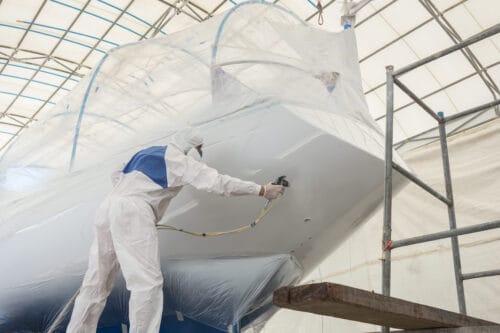
Corrosion isn’t a minor issue for the marine industry; if not addressed properly, corrosion can mean the end of a ship’s sailing days. Salt water can siphon away electrons from metal, leading the metal to essentially weaken, and the water, its oxygen content, and metal can react and create rust. A company sending out a marine vessel or using marine equipment needs to add anti-corrosion coatings to any surface that might potentially be exposed to the humid, salty environment.
Why Is Corrosion Such a Problem for the Marine Industry?
Corrosion can affect even strong metals like steel. Simply having a well-built ship made of durable metal isn’t enough; the water will quickly get to work on the metal and promote corrosion. That can lead to equipment breakdowns and even hull failure. At best, the corrosion simply looks terrible, but it’s also possible that the corrosion could mean a lot of repairs.
It’s Not Just the Water You Need to Worry About
Most people worry about the salty water against the metal surface of the ship, but that’s not the only part of the environment that can cause corrosion on marine vessels and equipment. Salty air itself can also promote corrosion, and that’s even more insidious because you don’t think about the salty air touching metal. You can see water lapping up against the hull and spray from waves hitting equipment, but you don’t have such a visual reminder that air molecules are having an effect, even though they’re constantly in contact with the surfaces that are above water.
The salty, humid air can also affect any cargo and equipment the ship has on board if those aren’t protected. Equipment needs anti-corrosion coatings when possible, and cargo needs to be shielded well from the environment.
Even the Interior Pipes Aren’t Safe
You’re not going to have a perfect vacuum within the walls of the ship, and the humidity and salt in the air will seep their way into every crevice. Unfortunately, this can accelerate the aging and degradation process of pipes (plumbing or otherwise), leading to higher energy usage and more frequent repairs. Neither of these are things you need in general, much less when you’re halfway across the Pacific. Anti-corrosion coatings on plumbing pipes offer direct protection from the effects of humidity and salt, while coatings that have additional insulating properties help protect parts of the ventilation and heating systems. Better pipe integrity leads to better energy savings.
Preventing Corrosion Reduces Maintenance Needs
Any time you can prevent rusting and other corrosion, you’re reducing the need for more maintenance overall. Anti-corrosion coatings don’t eliminate the need for maintenance, obviously, but your tasks should be easier in general, with the need for serious repairs reduced in frequency. And don’t forget that the marine environment can affect the tools and parts you keep around for those repairs, too. Add anti-corrosion coatings to those, too, such as hot plate welding coatings.
You May Have Better Speed and Energy Efficiency
Anti-corrosion coatings offer a couple of extra benefits that you may not have thought about. Some of these coatings help reduce the drag of the water against the hull, and less friction and drag mean less energy is spent fighting currents. The ship’s engines don’t have to work quite as hard to keep an even speed, reducing the strain on the engine and allowing the ship to proceed more smoothly along its path to its next port.
Sun Coating Company offers coatings for most environments, including marine. Contact us to discuss the application and whether you need liquid or powder coatings. If you need a specialty coating, such as Sandstrom Mil-Spec coatings, we offer those, too. Don’t wait to protect the ships and equipment that keep your business running.