

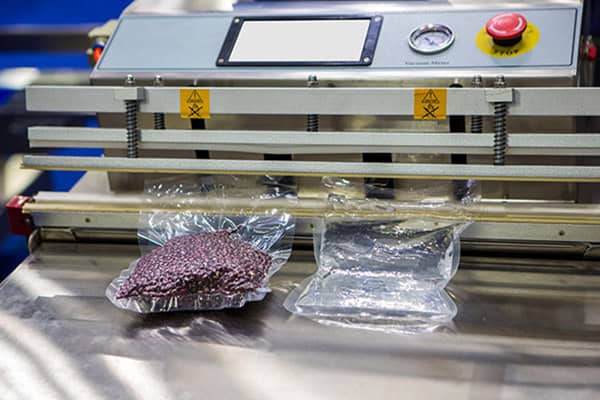
In high-speed flexible packaging operations, efficiency is measured in milliseconds and pennies per package. When an automated form-fill-seal (FFS) machine, pouch filler, or overwrapping line runs smoothly, the profitability of a production facility is maximized. However, anyone operating a packaging line knows that one of the most persistent, frustrating bottlenecks occurs at the thermal interface: the heat sealing jaws.
Over time, plastic films, ranging from low-density polyethylene (LDPE) and polypropylene (PP) to complex co-extruded multi-layer laminates and sustainable bio-polymers, begin to stick to the sealing faces. This sticking triggers a number of costly operational headaches. It starts with minor cosmetic defects like unsightly wrinkles, smudges, or stretched plastic on the seal seam. If left unchecked, it escalates into structural seal failures, pinholes, or outright package tears that compromise product integrity, leading to leaks and rejected batches.
The Hidden Cost of Thermal Degradation and Downtime
Worse yet, as film residue continually bakes onto the hot metal surfaces, it undergoes carbonization, forming a hard, crusty buildup. This thermal degradation forces maintenance teams to halt production for manual cleaning, scraping away residues with brass brushes or solvents; a practice that damages the sealing jaws and shortens their lifespan. For decades, packaging engineers have turned to standard anti-stick coatings to solve this issue, only to find themselves trapped in a repetitive cycle of premature coating wear and recurrent sticking.
At Sun Coating Company, we have spent over 60 years analyzing these surface failures across thousands of industrial applications. In this deep dive, we will examine the physics and chemistry behind why standard non-stick coatings fail on heat sealing jaws, and explore how our proprietary coatings eliminate polymer buildup and keeps packaging lines running at peak performance.
The Mechanics of Sticking: Why Heat Sealing Jaws Attract Film Residue
To understand why traditional surface treatments fail, we must first look at the harsh environment of the heat sealing process. Heat sealing relies on a precise synchronization of three variables: time, pressure, and temperature. The sealing jaws must rapidly transfer thermal energy through the outer packaging layers to melt the inner sealant layers, fusing them together into a hermetic bond.
During this microsecond window of heat and compressive force, the plastic film reaches its molten or semi-molten state of high surface energy and chemical affinity when heated. If the sealing jaw’s surface exhibits any microscopic porosity, roughness, or chemical vulnerability, the molten polymer will physically anchor itself into those micro-cavities.
Additionally, modern packaging films are rarely pure polymers. They are loaded with processing additives, including:
- Slip agents (such as erucamide or oleamide)
- Anti-blocking agents
- Colorants and pigments
- Chemical stabilizers
Under the extreme temperatures of continuous sealing, these low-molecular-weight additives migrate, or “bleed,” to the surface of the film. Once exposed to hot metal, these additives oxidize and become incredibly tacky, acting as an adhesive that accelerates the buildup of film residue.
Why Standard Non-Stick Coatings Fail on Sealing Jaws
When film sticking becomes an issue, the traditional response is to apply a standard industrial non-stick coating, While these coatings provide initial release properties, they frequently fail prematurely in heavy-duty heat sealing environments due to three fatal flaws:
Poor Mechanical Wear
In a heat sealing application, the jaws are subjected to continuous mechanical cycling, high-pressure clamping, and abrasive contact with the film edges (which can be surprisingly sharp at high speeds). Standard PTFE coatings cannot withstand this relentless abrasive wear. Within weeks, or sometimes even days, the thin fluoropolymer layer wears away, exposing the raw aluminum, brass, or steel substrate underneath. Once the bare metal is exposed, film sticking resumes.
Micro-Porosity and Chemical Penetration
Conventional fluoropolymer coatings possess microscopic porosity. Under intense sealing pressures, the (liquified) slip agents and volatile outgassings from the plastic film migrate through these micro-pores, reaching the metal substrate. Over time, these chemicals undermine the coating’s bond, causing the standard non-stick layer to blister, flake, or peel off into the packaging stream; creating a severe product contamination risk.
The Sunoloy® Solution: Engineered Surface Synergy
Recognizing the inherent limitations of standard coatings, Sun Coating Company engineered a revolutionary alternative: Sunoloy® coatings. Sunoloy® represents a proprietary family of advanced fluoropolymer coatings with superior release performance. .
Key Operational Benefits of Sunoloy® on Heat Sealing Jaws:
- Toughness and Durability: Sunoloy® offers performance that exceeds standard PTFE coatings, extending the service life of your sealing hardware.
- Impermeability: Our proprietary coatings seal off micro-porosity, preventing (liquified) film additives, waxes, and volatile compounds from migrating beneath the surface. This secures the integrity of the release surface.
- FDA Compliance: Sunoloy® formulations are compliant with FDA regulations for direct food contact, making them ideal for primary food packaging, dairy, confectionery, and medical device pouch sealing.
Maximizing Packaging Efficiency with Sun Coating Company
Avoiding film sticking involves more than just applying a nonstick coating. At Sun Coating Company, we deliver customized surfacing solutions.
Our proprietary Sunoloy® line allows us the technical capabilities to formulate and apply custom coatings designed to combat sticking and wear at elevated temperatures. From serrated sealing jaws and chevron patterns to cut-off knives, sealing bars, and side-seal plates, we provide surface engineering that restores and improves your existing tooling.
By upgrading your packaging hardware with our advanced nonstick coatings, your operation will experience reduced maintenance, downtime, or rejects, and extended performance-life. Maintenance teams can shift away from aggressive scraping and chemical scrubbing, replacing them with simple, routine wipe-downs that keep your lines running continuously at maximum throughput.
Stop Fighting Film Buildup. Partner with Sun Coating Company Today.
Don’t let persistent film sticking, constant cleaning cycles, and premature coating wear compromise your packaging line’s productivity. Sun Coating Company possesses the knowledge and expertise to resolve your toughest sticking challenges.
Contact Sun Coating today to discuss your heat sealing challenges, request a technical consultation, or arrange for a trial coating on your sealing jaws. Let us show you how our engineered surface solutions can optimize your process, reduce your operational costs, and maximize your uptime.