

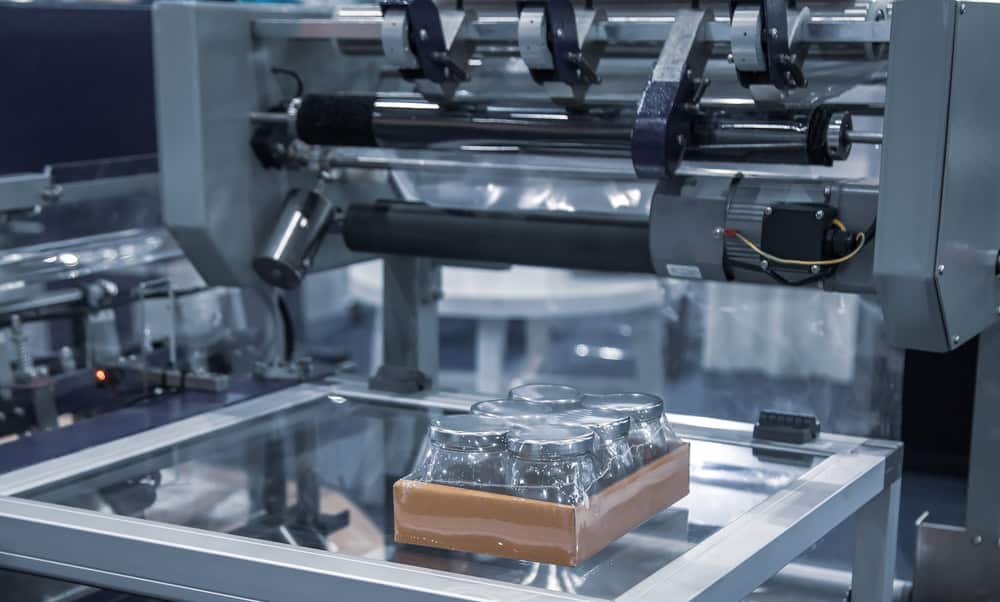
If you work with shrink wrap equipment, you know that seal quality can make or break your production line. One day, your seals look perfect, the next day, you’re dealing with weak spots, leaks, or product rejections. The quality and condition of the coating on your heat-sealing components can be the issue rather than the machine itself.
Let’s talk about something that doesn’t get enough attention: coating thickness and uniformity. You can save time, money, and a great deal of frustration by being aware of this minor factor, which has a significant impact on seal integrity.
What Coating Quality Actually Does
The coating on the sealing surfaces of your shrink wrap equipment fulfills a number of vital functions. Melted plastic cannot stick to metal parts because of the non-stick barrier it forms. Additionally, it guards against corrosion and wear on the underlying metal.
The dimensional integrity of the machined metal surface, tool alignment, and contact pressure all play a role in heat distribution. When coating quality degrades over time, its ability to perform consistently under those conditions diminishes, contributing to seals that don’t pass quality inspections or don’t hold as intended.
The Real Cost of Inconsistent Coatings
The majority of production managers concentrate on difficulties that are readily apparent, such as electrical or mechanical malfunctions. In contrast, coating uniformity seems insignificant. However, when your thickness degrades, the coating is significantly ablated, and the following occurs:
- Production Slowdowns: Operators need to constantly adjust machine settings to compensate for uneven heat distribution. What should be a set-it-and-forget-it process becomes a constant babysitting job.
- Material Waste: Weak seals mean rejected packages. Those rejected packages represent wasted film, wasted product, and wasted labor.
- Shortened Equipment Life: Thin spots in the coating wear through quickly, exposing the metal underneath to direct contact with hot plastic. This accelerates wear and forces you to replace components more frequently.
- Quality Control Headaches: When seal strength varies from package to package, you can’t predict which ones will fail. This unpredictability creates problems throughout your quality control process.
How Heat Sealing Actually Works
You should understand the sealing procedure in order to appreciate why coating thickness, uniformity, and integrity are so important. Your shrink wrap machine uses pressure and heat to form a seal on a plastic sheet. The plastic is sufficiently softened by the heat to allow the layers to bond. At this crucial point, the pressure keeps them together. The interface where this occurs is created by the coating on your jaw or sealing blade.
If the coating has begun to degrade, losing its nonstick properties, becoming more permeable, or wearing unevenly, the sealing surface can no longer perform as designed. Areas where the coating has thinned through wear may allow plastic to adhere, generate friction, or transfer heat differently than intended.
This problem compounds over time. As the coating wears down faster, the heat distribution can change. Your machine that worked perfectly last month gradually becomes unreliable. This is especially critical with hot plate welding coatings, where coating durability and consistent surface quality directly affect seal strength across the blade.
What Makes a Good Coating Solution
Advanced coating solutions like Sunoloy® offer significant advantages. These proprietary formulations are specifically engineered for packaging equipment, combining outstanding nonstick performance, resistance to permeation, toughness, durability, and heat resistance in a way that generic coatings simply can’t match.
Many Sunoloy® formulations are also FDA-compliant, making them suitable for food and pharmaceutical packaging applications. The result is superior performance-life, meaning you get more cycles, fewer recoating intervals, and more consistent results over the long run.
Here’s what sets premium coatings apart:
- Uniform Application: Advanced coating processes produce a highly consistent surface, a mark of quality manufacturing that supports reliable, repeatable contact between the sealing surface and the film
- Heat Resistance: Superior materials maintain their properties even under continuous high-temperature operation
- Release Characteristics: Reduce or eliminate sticking without frequent cleaning
- Durability: Premium coatings last significantly longer, reducing downtime for replacement
The Sun Coating Company Difference
At Sun Coating, we’ve built a reputation on solving exactly these kinds of problems. We provide one of the largest lines of coatings available for the packaging industry, which means we’ve seen and solved just about every coating challenge that exists.
Sunoloy® coating technology represents years of research and development focused specifically on packaging equipment. In many cases, we work with original equipment manufacturers to improve their machines right from the factory.
This collaboration between coating specialists and equipment manufacturers matters more than you might think. When coating experts work directly with the people designing the equipment, they can optimize the coating for exact specifications. The result is superior performance compared to after-market solutions or generic coatings.
We currently coat a wide range of packaging components:
- Heat sealing blades
- Heat sealing jaws
- Heat sealing plates
- Heat sealing heads
- Blister pack packaging equipment
- Fill tubes
- Shrink wrap machines
- Bagging machines
- Plastic forming equipment
- Thermoforming tooling
- Hot plate welding components
We have a thorough understanding of how coatings function in a range of settings and applications thanks to our vast expertise with diverse equipment types.
Signs Your Coating Needs Attention
How do you know when coating issues are affecting your operations? Watch for these warning signs:
- Inconsistent seal integrity or appearance: Your coating is most likely wearing unevenly if the seals appear different from one package to the next; some glossy, some dull, and others failing.
- Adhesion problems: If plastic frequently sticks to sealing surfaces, requiring frequent cleaning, your coating has likely worn thin in those spots.
- Visible wear patterns: Physical inspection might reveal shiny spots, discoloration, or obvious thin areas where the coating has degraded.
- Increased seal failures: A gradual uptick in quality control rejections often correlates with coating degradation.
Preventive Maintenance Matters
Preventing coating issues in the first place is the best course of action. Your equipment will continue to operate at its best with timely recoating and routine inspection.
- Establish a proactive maintenance schedule: Your equipment will continue to operate at its best with timely recoating and routine inspection. Create a timetable according to your operating conditions and production volume.
- Adjust recoating frequency based on usage: Coating replacement may be necessary every six months for high-volume operations with numerous shifts. Operations with lower output could extend that to a year or longer.
- Document coating history and performance: Keep records of coating application dates and any performance issues. This data helps you predict when recoating will be necessary and can reveal patterns that suggest other equipment issues.
- Invest in professional coating services: When it’s time to recoat, don’t take shortcuts. Using a specialized coating service that understands packaging equipment will deliver better results than trying to save money with generic solutions.
- Conduct regular visual inspections: Train operators to spot early warning signs like discoloration, chalking, or minor surface degradation before they become major problems.
- Monitor environmental factors: Track temperature fluctuations, humidity levels, and chemical exposure in your facility, as these conditions directly impact coating longevity and performance.
- Schedule planned downtime strategically: Coordinate recoating projects during scheduled maintenance windows or seasonal production lulls to minimize operational disruption and maximize efficiency.
Making the Smart Investment
Sun Coating Company’s Sunoloy® coatings typically exceed the performance of original equipment manufacturer coatings. This means you’re not just maintaining your equipment’s original performance; you’re actually improving it.
Getting Started
If you’re experiencing any of the issues described here, start with a thorough inspection of your heat sealing components. Look for visible wear, measure seal strength consistency, and track any quality control rejections related to seal integrity.
Reach out to coating specialists who understand packaging equipment specifically. Generic coating services might not grasp the unique demands of continuous heat sealing operations.
Ask about coating thickness specifications and how they control consistency during application. A reputable coating service should be able to explain their process and show you data supporting their claims.
Remember that your shrink wrap machinery is only as good as its weakest component. A perfectly maintained machine with inconsistent coating will still produce inconsistent results. Investing in quality coating solutions protects all your other investments in equipment, training, and quality control.
The bottom line? Coating thickness uniformity isn’t a minor detail, it’s the foundation of reliable seal integrity. Get this right, and everything else falls into place. If you’re ready to strengthen seal integrity and protect your equipment investment, contact Sun Coating today to discuss coating solutions built for consistency and performance.