

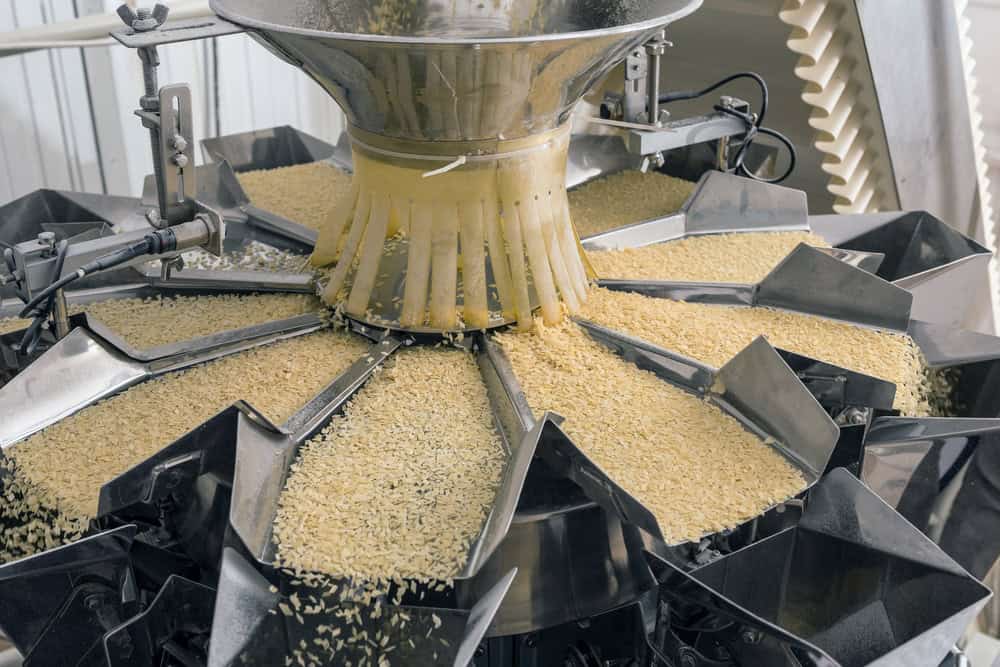
In the high-speed world of industrial packaging, the difference between a record-breaking production day and a costly afternoon of downtime often comes down to a few microns of fluoropolymer coating. Whether your facility handles heat-sealing, form-fill-seal (FFS) operations, or high-volume labeling, the performance of your machinery depends on two primary factors: heat resistance and non-stick release properties.
When selecting a high-performance finish for seal bars, heating plates, or conveyor components, two heavyweights usually dominate the conversation: Teflon® PFA (Perfluoroalkoxy) and Teflon® FEP (Fluorinated Ethylene Propylene). While both are members of the fluoropolymer family and offer exceptional non-stick characteristics, their molecular structures dictate vastly different behaviors under thermal and mechanical stress.
In this technical comparison, we will deconstruct the differences between PFA and FEP, helping you determine which coating will optimize your packaging line’s efficiency.
Understanding the Fluoropolymer Advantage
Fluoropolymers are a class of plastics characterized by a strong carbon-fluorine bond. This bond is one of the strongest in organic chemistry, providing the “inert” quality that makes Teflon® famous. In a packaging environment, these coatings prevent molten plastic films from sticking to seal bars, allow adhesives to peel away from labeling equipment, and guarantee that products glide through chutes without friction.
However, not all Teflon® coating is created equal. Sun Coating Company has spent decades helping manufacturers navigate these choices, providing specialized application services that make sure the coating matches the specific rigors of the production environment.
Teflon® FEP: The King of Non-Stick Release
Fluorinated Ethylene Propylene (FEP) is often the go-to choice for applications where “release” is the absolute priority. If your primary struggle is stubborn adhesives or low-temperature plastic films that won’t let go of the machinery, FEP might be your strongest ally.
Technical Characteristics of FEP:
- Lower Melt Viscosity: FEP is a “melt-processible” polymer. During the coating process, it flows more easily than PFA, resulting in a non-porous, highly uniform film. This creates a surface that is exceptionally smooth at a microscopic level.
- Superior Non-Stick Properties: Because of its smooth finish, FEP often provides slightly better release than PFA for certain types of sticky substances.
- Chemical Inertness: Like all Teflon® products, FEP is virtually unaffected by most chemicals, which is vital in packaging lines that require frequent sanitation with harsh cleaning agents.
Where FEP Excels in Packaging:
FEP is ideal for labeling equipment, glue pots, and chutes where the operating temperature does not exceed 400°F (204°C). It is a cost-effective solution for facilities that need a reliable, high-release surface but don’t operate at the extreme high-heat ranges required for heavy-duty sealing.
Teflon® PFA: The High-Heat Powerhouse
When the packaging line speeds up and the temperatures rise, FEP can reach its limit. This is where Perfluoroalkoxy (PFA) takes center stage. PFA was engineered to combine the processibility of FEP with the high-temperature endurance of PTFE (the original Teflon).
Technical Characteristics of PFA:
- Extreme Temperature Resistance: Teflon PFA coating can withstand continuous operating temperatures of up to 500°F (260°C). In the packaging world, this is a game-changer for high-speed heat-sealing bars that must maintain a constant, high-heat output to fuse thick films or multi-layer laminates.
- Increased Toughness and Durability: PFA has a higher mechanical strength than FEP. It is more resistant to “creep” (deforming under constant pressure) and has better “flex life.” In a packaging line where seal bars are constantly striking a surface, PFA holds up better against the mechanical wear.
- Superior Permeation Resistance: PFA has a denser molecular structure, making it less permeable to gases and vapors. This is a critical factor in food packaging where flavor contamination or chemical leaching must be avoided at all costs.
Where PFA Excels in Packaging:
PFA is the gold standard for high-speed heat sealers, thermal transfer equipment, and any component that undergoes repeated mechanical stress at high temperatures. If your line runs 24/7 at peak thermal capacity, PFA is the investment that prevents premature coating failure.
Head-to-Head: The Technical Comparison
To choose the right coating, we must look at the specific performance metrics that impact the packaging industry.
| Feature | Teflon® FEP | Teflon® PFA |
| Max Operating Temp | 400°F (204°C) | 500°F (260°C) |
| Melting Point | 500°F (260°C) | 582°F (305°C) |
| Flex Life | Excellent | Superior |
| Release (Non-Stick) | Excellent | Excellent |
| Durability/Hardness | Moderate | High |
| Clarity | Very High | High |
Heat Resistance: The Defining Factor
In many modern packaging operations, sealers are pushed to the limit to increase “parts per minute.” As the dwell time (the time the heat bar touches the film) decreases, the temperature of the bar must increase to compensate. FEP can begin to soften or “delaminate” if it is pushed too close to its 400°F limit for extended periods. PFA’s extra 100°F of “thermal headroom” provides a safety margin that makes sure the coating won’t fail during a high-speed run.
Non-Stick Properties and Cleanup
Both coatings offer a “coefficient of friction” that is among the lowest of any solid material. However, PFA is often preferred for “sticky” food packaging (like cheese or meats) because its increased toughness allows for more aggressive cleaning if product buildup does occur. FEP is softer and can be more easily scratched by abrasive cleaning tools.
The Role of Sun Coating Company Expertise
Choosing between PFA and FEP is only the first step. The success of a coating depends heavily on the application process. This is where Sun Coating Company provides a critical advantage for packaging facilities.
Surface Preparation
A Teflon® coating is only as good as its bond to the substrate. Sun Coating utilizes specialized grit-blasting and priming techniques to guarantee that whether you choose PFA or FEP, the coating stays bonded to your machinery even under the most intense thermal cycling.
Custom Coating Solutions
In some cases, a standard “off-the-shelf” PFA or FEP might not be enough. Sun Coating Company offers reinforced versions of these coatings. By incorporating ceramic or metallic reinforcements into the fluoropolymer matrix, they can create a surface that has the non-stick properties of Teflon® but the wear resistance of a much harder material. This is particularly useful in packaging lines that handle abrasive materials like corrugated cardboard or granular products.
Solving “Build-Up” Issues
If your line is experiencing “angel hair” (thin strands of plastic sticking to seal bars) or adhesive buildup, the experts at Sun Coating can analyze the specific film or glue you are using to recommend the exact PFA or FEP grade that will minimize that specific interaction.
Beyond the Coating: Why Total Maintenance Matters
In a packaging line, the coating is a “wear item.” Over millions of cycles, even the best PFA or FEP will eventually wear down.
Partnering with Sun Coating Company allows packaging facilities to implement a proactive “re-coating” schedule. Rather than waiting for a seal bar to fail and ruin a production run, components can be sent for stripping and re-application during planned maintenance shutdowns. This guarantees the line always operates at “factory-new” efficiency levels.
Environmental and Safety Considerations
Both PFA and FEP are FDA-compliant for food contact when applied correctly. In the modern packaging landscape, safety and compliance are non-negotiable. PFA, with its higher resistance to chemical degradation, is often favored in pharmaceutical packaging where “extractables” and “leachables” are closely monitored by regulatory bodies.
Final Verdict: Which is Right for You?
Choose Teflon® FEP if:
- Your operating temperatures stay consistently below 400°F.
- Your primary concern is the release of adhesives or low-temp films.
- You are looking for the most cost-effective non-stick solution.
- The components do not face heavy mechanical abrasion.
Choose Teflon® PFA if:
- Your line operates at or near 450°F-500°F.
- You are running high-speed equipment with high cycle counts.
- You need the highest level of mechanical durability and flex life.
- The packaging involves pharmaceutical or high-purity food products.
Conclusion
The packaging line is the “last mile” of your production process. A failure here is not just an inconvenience; it is a bottleneck that stops your product from reaching the customer. Understanding the technical nuances of Teflon® PFA vs. FEP allows you to make an informed decision that balances performance, longevity, and cost.
At Sun Coating Company, we don’t just apply coatings; we provide engineering solutions. Our team understands the stresses of high-speed packaging and can guide you to the exact fluoropolymer finish that will keep your line running at peak performance. Whether you need the unparalleled release of FEP or the high-temperature ruggedness of PFA, we have the expertise to make sure your components are protected for the long haul.
Ready to optimize your packaging line? Contact Sun Coating Company today to discuss your specific application and find out which Teflon® coating will revolutionize your production efficiency.