

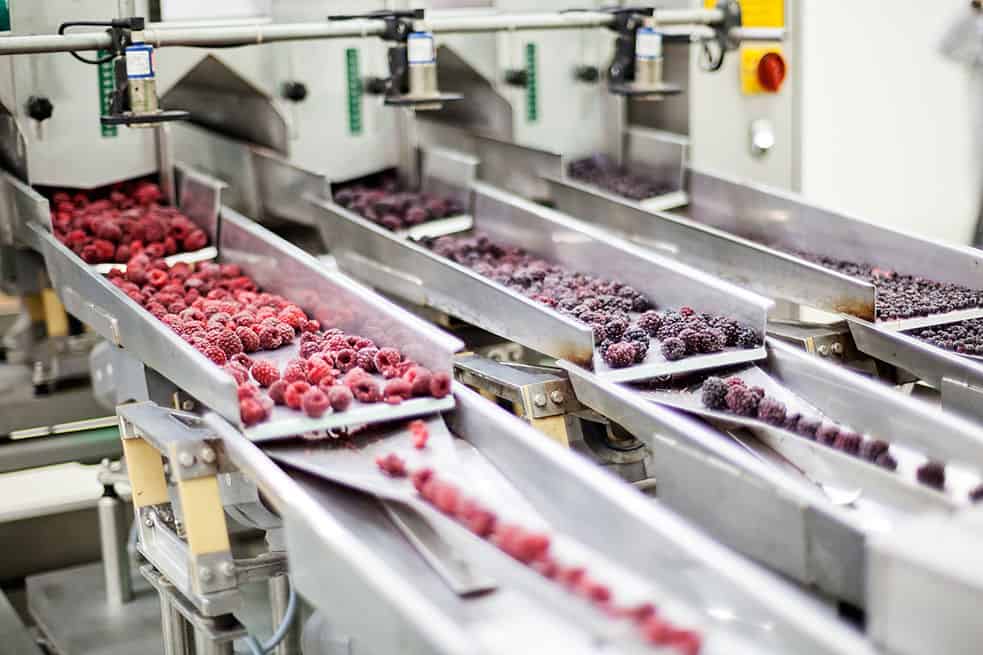
In the high-stakes world of industrial food manufacturing, optimization usually centers around heat. Processing plants meticulously manage baking temperatures and heat-sealing thresholds. However, one of the fastest-growing sectors in the food industry operates at the exact opposite end of the thermometer: Individually Quick Frozen (IQF) processing.
From diced poultry and seafood to delicate berries and farm-fresh vegetables, the global demand for IQF products continues to surge. The reason is simple: IQF technology flash-freezes individual pieces of food rapidly, preventing the formation of large ice crystals within vegetable or animal tissues. This preserves the structural integrity, flavor, and nutritional profile of the product far better than traditional bulk-freezing blocks.
Yet, working at sub-zero temperatures introduces a completely unique set of mechanical and material handling challenges. When moisture-rich food meets sub-zero metal machinery, physical bonding happens in milliseconds.
Standard manufacturing components quickly become plagued by frozen product accumulation, ice dams, and severe friction spikes. To keep these automated, continuous freezing lines moving without frequent emergency shutdowns, specialized surface chemistry is required.
The Sub-Zero Dilemma: How Cryogenic Temperatures Defeat Standard Surfaces
In a standard room-temperature application, stainless steel is the gold standard for hygiene. But inside an industrial blast freezer or cryogenic tunnel, where ambient temperatures regularly plummet between -20°F and -50°F (and even lower in liquid nitrogen systems), stainless steel turns into a liability.
When unfrozen or partially wet food items land on a sub-zero metal conveyor link, freezing grid, or transfer chute, two disruptive phenomena occur instantly:
Adhesive Cryo-Bonding: Surface moisture on the food product acts as an instantaneous, aggressive structural adhesive. The water freezes directly to the microscopic pores and machining grooves of the raw metal substrate. The product no longer slides; it anchors.
Ice Bridging and Damming: As more product flows down the line, subsequent pieces catch on the frozen-down items. This creates a cascading ice bridge, resulting in catastrophic material pile-ups, product bruising, and immediate line stoppages.
The Chemistry of Success: Fluoropolymers at Sub-Zero Temperatures
Overcoming the unique challenges of IQF processing requires specialized high-performance fluoropolymers, including PTFE, FEP, and Teflon PFA coatings.
While these advanced coatings are widely recognized for their high-heat limits in commercial baking, their sub-zero performance is where advanced engineering truly shines.
Maintaining an Ultra-Low Coefficient of Friction
Fluoropolymer coatings feature low surface energy, meaning virtually nothing can adhere permanently to them. For IQF lines, this low surface energy prevents ice and moisture from forming a secure mechanical bond with the underlying equipment. Even at -40°F, the coefficient of friction remains remarkably low, allowing flash-frozen diced meats or wet fruits to slide effortlessly through chutes, vibratory feeders, and transition points.
Cryogenic Flexibility and Thermal Shock Resistance
Unlike standard plastics or paint finishes that turn brittle and fracture when frozen, high-quality fluoropolymers retain their structural flexibility at cryogenic temperatures. Because these coatings possess outstanding thermal stability across a massive operating range, from below -100°F up to 500°F, they can comfortably handle the rapid thermal cycling common in industrial plants.
Critical IQF Machinery Components that Require Coating Optimization
To fully unlock the benefits of high-capacity IQF freezing, specific mechanical stress points throughout the automated line must be engineered with targeted surface properties:
1. Freezing Grids, Tunnels, and Conveyor Belts
Whether your plant utilizes a fluid bed freezer, a spiral freezer, or a straight belt tunnel, the initial point of freeze is the most volatile zone. Wet food products drop directly onto metal links or perforated plates.
Applying an exceptionally durable, FDA-compliant fluoropolymer system makes sure that frozen items lift cleanly off the belt at the discharge end without tearing or leaving behind fragments.
2. Vibratory Feeder Pans and Distribution Chutes
Prior to entering the freezer, product must be evenly distributed across wide beds to prevent clumping. If a feeder pan accumulates a layer of frozen frost, the smooth, micro-vibrations lose their effectiveness, causing the food to bottleneck. A low-friction, moisture-repellent coating preserves consistent flow into the freezing zone.
3. Flighted Incline Conveyors and Diverter Gates
Automated sorting gates and incline steps frequently slam or slide against high-velocity products. These high-motion components require reinforced fluoropolymer systems that couple non-stick properties with robust wear resistance. This balance makes sure the coating withstands both the constant abrasion of frozen items and mechanical friction without wearing down prematurely.
Why the Application Process Dictates Field Longevity
In industrial food production, a coating is only as reliable as the application process behind it.
At Sun Coating Company, our application methods are designed to secure adhesion.
Substrate Preparation: We thoroughly clean and grit-blast raw metal components to build an anchor profile. This microscopic texturing secures a mechanical bond between the metal and the coating system.
Thermal Curing: Utilizing calibrated, industrial ovens, we cure our coatings under exact temperature profiles. This process drives out solvents and optimally forms the fluoropolymer coatings for maximum service life and performance.
Reinforced Wear-Resistant Systems: For heavy-wear food components, we offer advanced, multi-layer reinforced coating systems. By incorporating a matrix of tough, wear-resistant particles, we create a rugged “peaks and valleys” architecture. The non-stick fluoropolymer is shielded from abrasive wear by the tough peaks, which drastically extends the operational lifespan of your machinery.
Engineered to Comply: Total Safety with FDA Regulations
Every coating solution we apply for the food processing sector is fully compliant with FDA regulatory standards for direct food contact. By removing product buildup and ice damming, custom coating solutions help minimize food debris accumulation, making your sanitation cycles faster, more effective, and considerably less reliant on harsh manual scraping.
Ready to Optimize Your IQF Production Line?
As the industrial demand for individually quick frozen foods accelerates, plant efficiency comes down to managing surface friction. Don’t let sub-zero ice buildup, product damage, and frequent maintenance shutdowns freeze your bottom-line profitability.
Partner with an industry leader. Sun Coating Company brings over 60 years of technical expertise as a licensed, innovative industrial applicator. Whether you are an original equipment manufacturer (OEM) designing next-generation freezing tunnels, or a plant manager looking to eliminate a persistent bottleneck on an active packaging or processing line, let us help you find the exact fluoropolymer solution for your operational needs. Contact us today to get started.